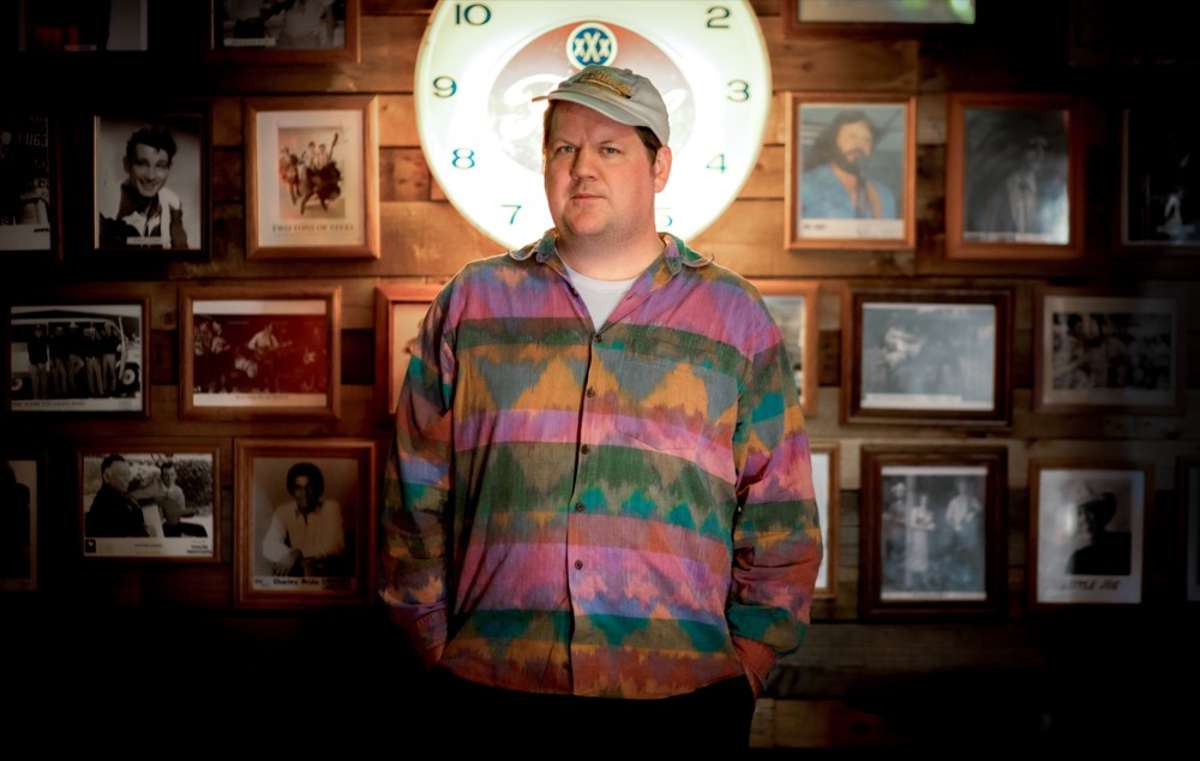
This is a partially seated show.
Over six unique and very personal studio albums, Jake Xerxes Fussell has found his musical future by reimagining, reorchestrating, and reunifying the past. By combining different traditional music sources in a completely original way, he routinely creates fresh works of art that are at once rooted in tradition and ingeniously modern.
“It starts at a very intuitive level, it has to be natural in order for it to succeed,” Fussell explains. “I’ll really get into a song and feel like I hear something in there like a melody, a particular phrase, a chorus, and I feel like ‘I could use that’ and one thing leads to another.”
It’s Fussell’s inspired intuition that remakes a classic American folk song like “Rock Island Line”—the first single from his latest album The Old Beloved Path—into something that still rings with inherent wisdom but is completely his own. An accomplished fingerpicker on guitar who’s also blessed with a smooth baritone voice that effortlessly exudes the gravitas his creations demand, he says that in the past he might have avoided a song like “Rock Island Line” because it seemed too commonplace to him—too many folksingers had already done it. This touchstone of the well-known fabric of American folk music, “didn’t really need my interpretation.” But after listening again to the recording of this train song by British skiffler Lonnie Donegan , something about the incantation of the chorus struck a chord. In typical Fussell fashion, his remarkable ear and intellect took over.
“The song struck me as very beautiful, but just singing the verses wasn’t working for me. I couldn’t relate,” he says looking back. “So, I wound up putting it together with an old English nursery rhyme that I had been kicking around. “Wire, briar, limberlock /How many geese is in our flock?” and “If you want to ride you got to ride it like you’re flyin, get your ticket at the station on the Rock Island Line.” Marrying those two things, I felt like something worked, it felt like a song to me.”
Prominent artists and documentarians in their own right, Fussell’s father is a folklorist, writer, painter, and photographer and his mother is an innovative fiber artist. Fussell grew up in an extended community devoted to the preservation of traditional cultural pursuits including storytelling, log cabin building, and basketmaking. Imbued with this deep respect for the past as well as an unquenchable intellectual curiosity, he grew up appreciating the beauty in those supposed lost arts and is now privy to all that in a way a lot of his compatriots in Indie music are not. While popular music songwriters like Bob Dylan and Leonard Cohen will always be among his heroes, he calls people who do nothing but source traditional music and play fiddle tunes faithfully as apostles of a “noble pursuit.”
“For people in the folk music world, songs are their religion. But traditional music is not a bee stuck in amber. I tend to think of everyone who plays traditional music as being on a spectrum from conservative to wildly creative. I am somebody who tends to sit on the edge of those two worlds. I don’t always present these songs in a historical context. I have to relate to them personally. I approach these songs through my own worldview.”