
Brigitte Calls Me Baby – Irreversible Tour
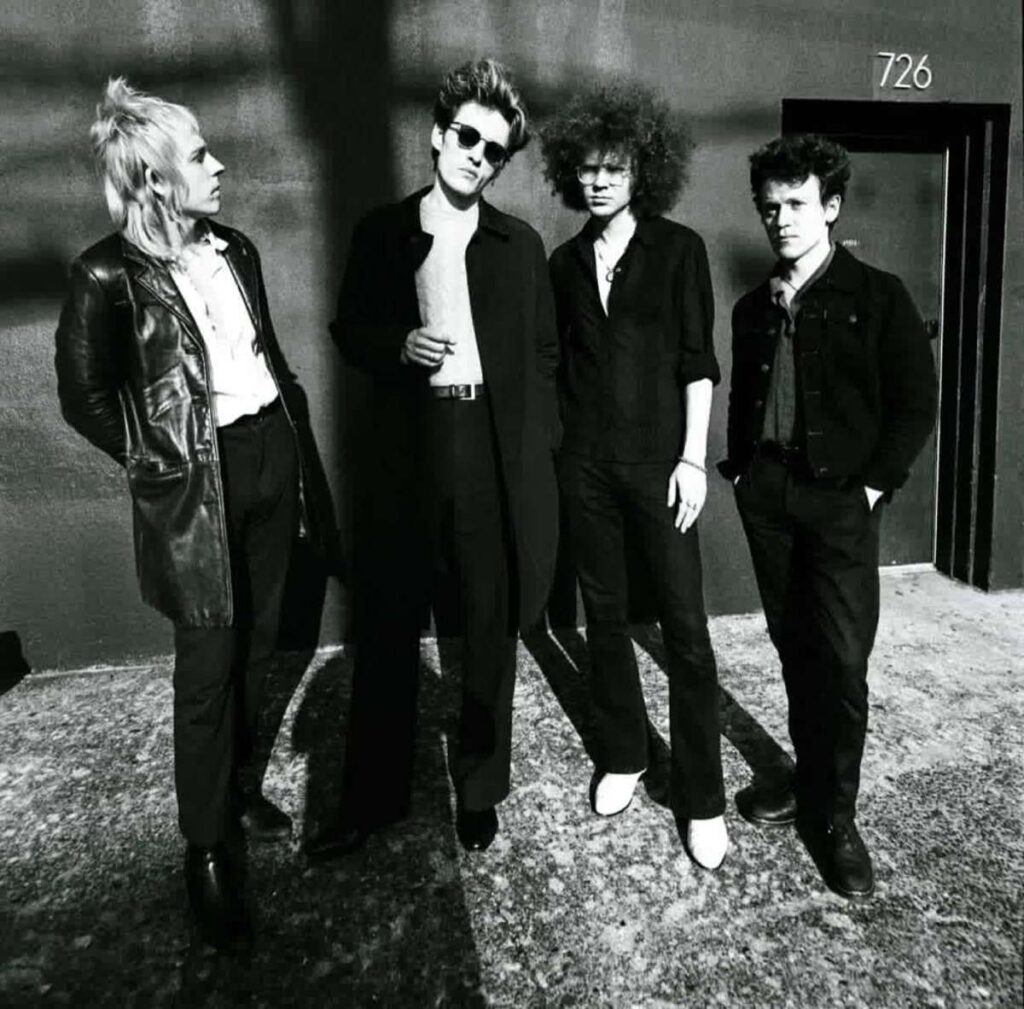
Since their widely lauded debut album, The Future Is Our Way Out, Chicago-based 5 piece Brigitte Calls Me Baby have brought a greater intensity of vision to their lavish breed of alt-rock, arriving at a boldly singular sound that is both thrillingly new and immediately essential to the modern rock landscape. In a major leap forward for the band, Brigitte Calls Me Baby’s sophomore album Irreversible captures the energy, intrigue and grandeur of their live show, all while pushing further into the exquisite pathos of their songwriting. “Our first album taught me that you’ve got to reach as far down into your soul as possible and be willing to show something real and raw to the world, and with this album that felt even easier and more natural,” says Leavins, whose signature croon imbues every track on Irreversible with a potent emotionality. “There was a time when I tried to bury the kind of feelings we’re displaying on this record, but now I’m at the point where I don’t feel the need to hold anything back.” Produced by Yves Rothman and Lawrence Rothman (Blondshell, Yves Tumor), Irreversible came to life in the midst of a relentless live schedule that’s included performing at leading festivals like Lollapalooza, sharing bills with the likes of Morrissey & Muse, and headlining sold-out tours across the U.S., U.K., and Europe. Recorded live at Lawrence’s the result is a majestic suite of songs that burn bright, hit hard, and passionately celebrate the drama of being alive. Instagram · Facebook · Spotify · YouTube
Friendship, Charlotte Cornfield
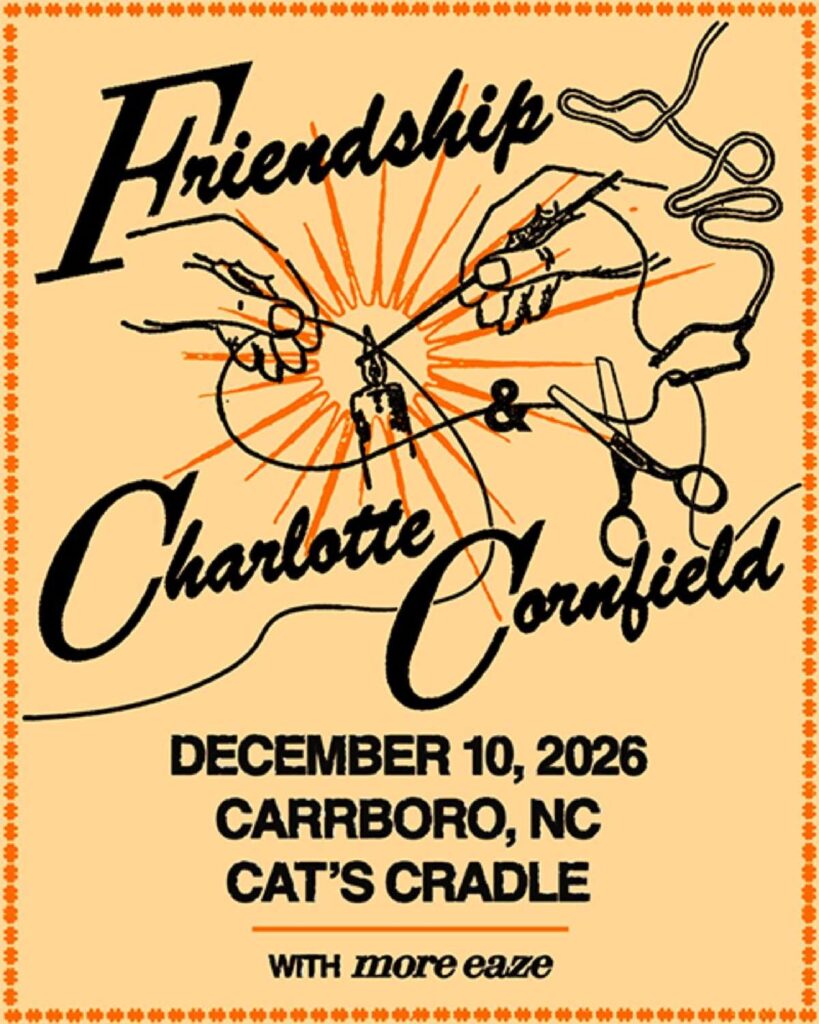
Friendship Music for sleeping and waking, walking and driving, hunting and fishing, for loitering outside a roadhouse on the haunted tundra. Okay in elevators, not great for dinner. On Caveman Wakes Up, Friendship’s new album and second for Merge Records, the band’s historically capacious definition of country music grows wider still. Shambolic guitars are offset by flute pads, bleary poetry is set against a Motown rhythm section, a song about Jerry Garcia and First Lady Betty Ford fades out with a drum solo, like if Talk Talk came from a dingy Philadelphia basement, and was fronted by James Tate. Songwriter Dan Wriggins’ ragged baritone cuts through eleven murky, swirling country-rock songs with profound lyrical substance and sincerity. Like an alarm clock incorporated into the edge of a dream, Caveman Wakes Up belongs equally to the conscious and subconscious mind, fraught with background, steeped in reference and experimentation, delivered casually and as a dire warning, dedicated, above all, to music’s creative soul. Over the years, dedication has paid off. Friendship has become a kind of reverse supergroup, wherein the band itself and each individual member is located centrally in an increasingly prominent scene of young folk and country musicians and songwriters. Drummer Michael Cormier O’Leary leads the instrumental collective Hour and, along with bassist Jon Samuels, run Dear Life Records, home to friends and peers who count Friendship as a major influence, including MJ Lenderman, Florry, and Fust. (Samuels also plays lead guitar in MJ Lenderman and the Wind). Guitarist Peter Gill’s band 2nd Grade records prolifically. Wriggins began writing the songs of Caveman Wakes Up on a downtuned classical guitar of Lenderman’s, and finished on a barely-tuned piano in an apartment he shared with Sadurn’s G DeGroot. In the summer of 2023, Wriggins had just left the Iowa Writers’ Workshop, where his love for poetry and mistrust for the academic poetry world grew in tandem. A relationship fell apart, and Wriggins crashed for several weeks at Lenderman’s and Wednesday’s Karly Hartzman’s home in North Carolina, where he recorded the first demos of “Resident Evil,” “All Over the World,” and “Love Vape.” Wriggins returned to Philadelphia, and the band got to work on new ideas, finally tracking the album in five days with engineer Jeff Ziegler (Mary Lattimore, War on Drugs). Wriggins recorded vocals with Love the Stranger engineer Bradford Kreiger, and organ, violin (Jason Calhoun), and flute (Adelyn Strei) were recorded by Lucas Knapp in a West Philadelphia church. Charlotte Cornfield Hurts Like Hell, Toronto songwriter Charlotte Cornfield’s March 27, 2026 Merge Records debut, is the most open-hearted, full-voiced album of her career and the first she’s recorded since the birth of her daughter in 2023. Decamping to Philip Weinrobe’s Sugar Mountain studio in Brooklyn, New York in January 2025, Cornfield was joined by Palehound’s El Kempner (guitar/vocals), Lake Street Drive’s Bridget Kearney (bass/vocals), Adam Brisbin (guitar/pedal steel), and Sean Mullins (drums). She and Weinrobe then recruited Feist, Buck Meek, Christian Lee Hutson, and Maia Friedman to sing on the album. “Every musician involved was a dream collaborator,” Cornfield says. These ten songs are at once a reaffirmation of Cornfield standing among the great singer-songwriters of her generation and the first articulation of her future, whatever uncertainty and love it may bring.
The Linda Lindas
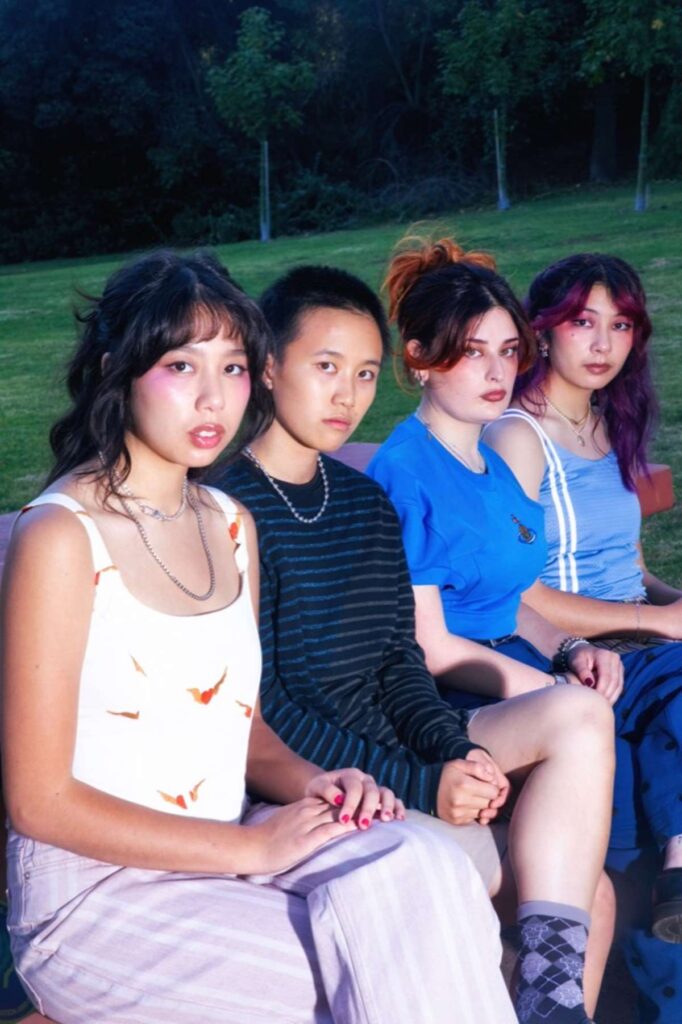
The Linda Lindas have partnered with PLUS1 so that $1 from every ticket sold on our tour will go towards supporting organizations working for equity, access, and dignity for all. www.plus1.org Every day around 4 p.m., The Linda Lindas put down their instruments and jumped in the pool. They used these aquatic moments as a reset during a week-long writing retreat in Palm Springs where phones were banned, the outside world was suspended, and four young people who’ve been making music since tweenhood were writing together in the same room for the first time. In the process, they figured out who they really are. GOTTA GET OUT, the third album from Bela Salazar, Eloise Wong, and Lucia and Mila de la Garza, is the sound of a band discovering itself. Historically, The Linda Lindas have written individually and brought songs to the table. It was a process that served them well through their impressive, Ramones-esque debut Growing Up (2022) and its forceful follow-up No Obligation (2024). The two records took them from L.A. Chinatown all-ages scene mainstays to tours with Green Day and song placements in Inside Out 2. But for this one, they wanted something a little different. “For the first time, we were presenting ideas to each other that weren’t fully formed. That was scary. But we worked through everything together and figured out the role each of us naturally plays,” Lucia explains. “Writing together was a way to find our collective sound,” adds Eloise. “Anything can work if we’re all shaping it together. We can write this slow indie song or a funky dance-y song. And it can all be for the band because we all worked on it together.” At the house with the pool, “I haven’t finished this, but do you wanna hear what I have?” became credo. Bela would conjure a “vibe” — a Logic loop, a guitar part twisted through pedals, a chord progression that was unmistakably hers — and they’d construct a song from there, working out lyrics in real time. They tinkered with synths for the first time, and graduated beyond bar chords. At a second retreat in Long Beach, a Mission Impossible marathon was the background ambiance as they worked out yet more songs — by the end, they had 30 total. “We discovered a lot about being very intentional,” says Lucia, who had recently graduated high school. “Gotta Get Out” was the very first song they wrote. They didn’t intend to make it the title or the theme, but kept coming back to it, rewriting verses right before tracking vocals, clipboard and pen in hand, until, as Lucia says, “we made it mean something.” Opening the LP with big spicy synths and an ominous groove, it captures a central restlessness: the itchiness of being inside while the world moves — the desire to break out of the old habits, the old sounds, the old you. The album’s visual world, designed by Eloise, makes the same argument through imagery: inspired by an old Audubon guidebook, clouds grow across the singles’ art from fair-weather cumulus to full cumulonimbus, viewed from a windowsill. The lyrics are rubber-stamped, the paper is glued, and every smudge is maintained. Website · Instagram · TikTok · YouTube · Facebook · Spotify
Deerhoof
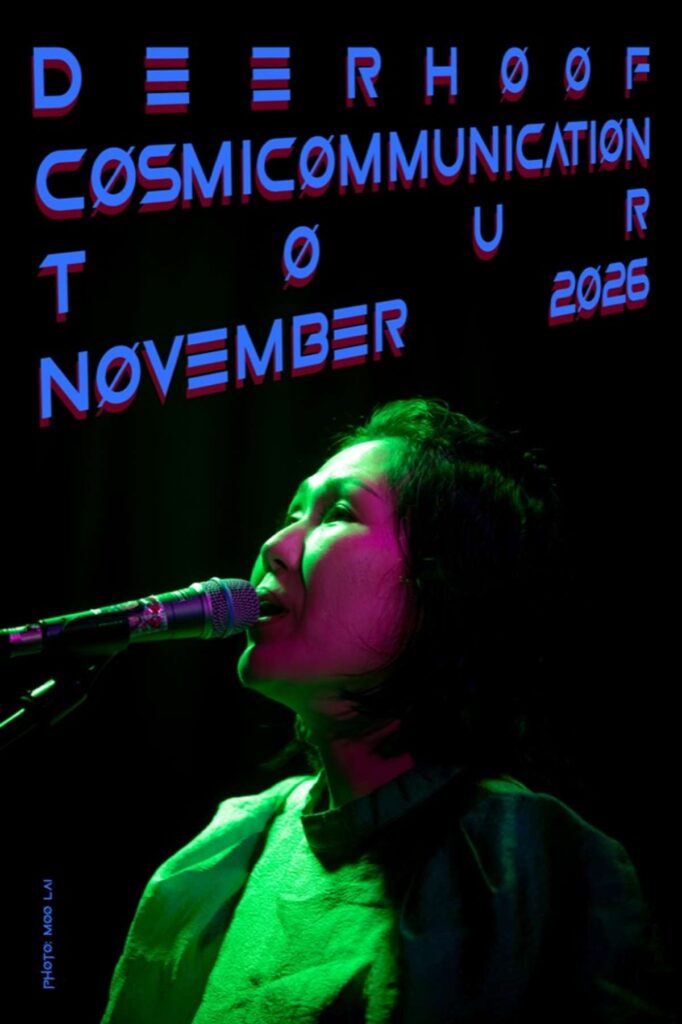
For a band that seems to thrive on collapse, it’s simply amazing that this US/Japanese quartet is now celebrating their 31st year. Though Deerhoof long ago established itself as one of the greatest rock groups ever to stride the earth-and if you think that’s hyperbole, you haven’t seen them live-the furiously inventive quartet releases new albums on the schedule of a young band still hungry for its first break. Each one discovers some previously unknown combination of candy-coated hard-rock riffs and free-jazz percussive freakouts, sideways J-pop hooks and fearsome dissonance, trenchant social commentary and surrealist humor. Fronting it all is Satomi Matsuzaki’s inimitable alto, whose plainspoken calm can seem strangely outside of the band’s maelstrom. This music is joyful and foreboding, cybernetic and deeply human, carrying an implicit note of defiant optimism in their refusal to bow to convention or received wisdom. Deerhoof is defined by such paradoxes. Missive 3-19-25: Deerhoof today announced their new album Noble and Godlike in Ruin will be released April 25th (Joyful Noise Recordings), and took an unexpected turn by exclusively premiering its lead single “Immigrant Songs” via Craigslist-two days ahead of the song’s official release at streaming services. In a series of Craigslist ‘Services’ posts advertising themselves for hire in their local communities, including Brooklyn, Tucson, Portland, and Minneapolis, the band shared a message directing readers how to hear their epic album closer alongside photos of the album artwork (front/back, insert, center label). This unconventional premiere serves to spotlight a tech platform that isn’t blatantly supporting fascism. “Immigrant Songs” is an odyssey like only Deerhoof could dream up: beginning with an innocuous lyric about showing up to a party, set to a delicate ostinato for bells and sparkling guitar; and ending with a noise-rock blowout that sounds like reality coming apart at the seams. The band of Satomi Matsuzaki, Ed Rodriguez, John Dieterich, and Greg Saunier get from one extreme to the other through expertly managed tension and inventive juxtaposition, weaving four-on-the-floor beats through bossa nova guitar chords, following passages of tightly coiled rhythm with wide-open vistas. All the while, the narrative about the party gradually reveals the allegory hinted at in the title. (Which, given Deerhoof’s encyclopedic relationship to music history, is probably also a Led Zeppelin reference.) “Kindness is all I needed from you,” Matsuzaki sings to an unwelcoming host, “but you think we’re in your house.” Not long after, the song detonates, its tightly wound art-pop giving way to several minutes of howling noise. “This song is kind of a sequel to Satomi describing her immigration tribulations in ‘Exit Only.’ It’s what it feels like to see the discourse around immigration get so twisted. The most criminal and barbaric ‘migrant horde’ to invade America was from Europe. There’s a sector of racialized, underpaid immigrants, doing labor white people won’t, who are getting deported and dehumanized in record numbers in recent years. They are really the glue keeping our society from collapsing. It’s these heroic fugitives, not millionaire politicians holding little signs with one hand while sending out fundraising emails about ‘strengthening our borders’ with the other, who actually have a thing or two to teach us all about how to resist and survive.” – Greg from Deerhoof Website · Instagram · Bandcamp · YouTube
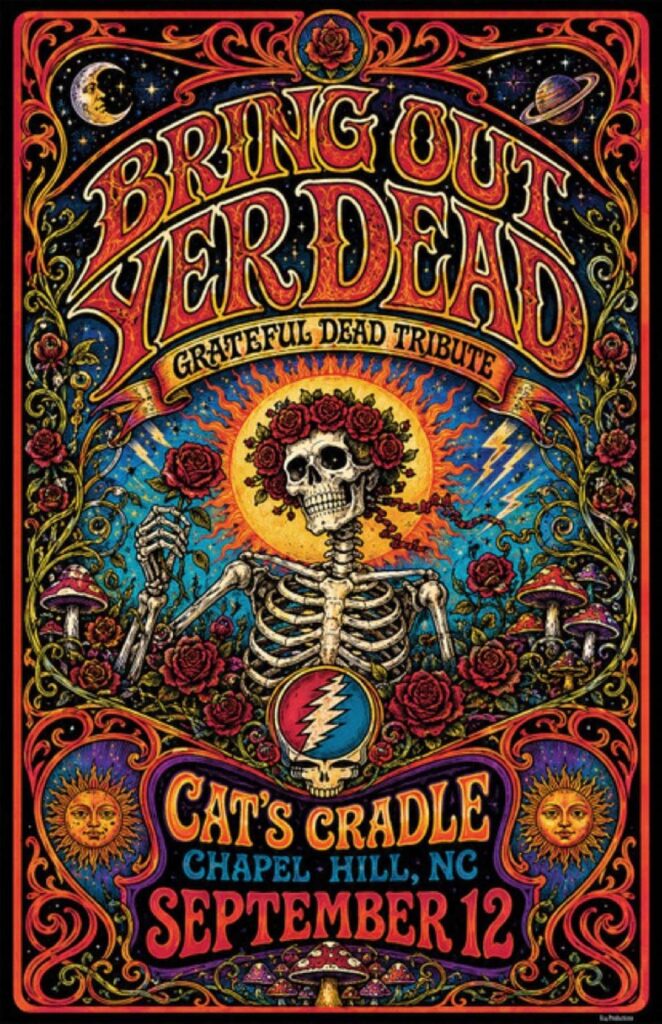
Bring Out Yer Dead
Hex Files
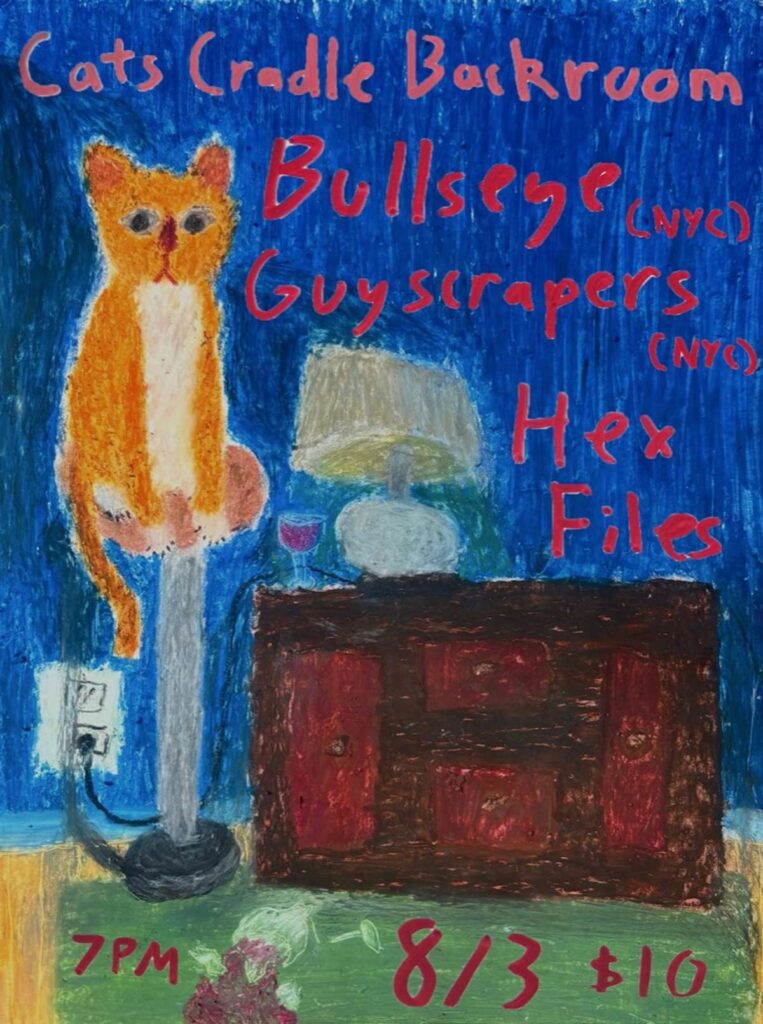
Hex Files guyscrapers bullseye
Protomartyr

Since their 2012 debut No Passion All Technique, the Detroit post-punk band Protomartyr have mastered the art of evoking place: the grinding Midwest humility of their hometown, as well as the x-rayed elucidation of America that comes with their vantage. Protomartyr—vocalist Joe Casey, guitarist Greg Ahee, drummer Alex Leonard, and bassist Scott Davidson—have become synonymous with caustic, impressionistic assemblages of politics and poetry, the literal and oblique. The group’s sixth album, recorded at Sonic Ranch in Tornillo, Texas, is called Formal Growth In The Desert. And though frontman Joe Casey did have a humbling experience staring at awe-inspiring Sonoran rock formations and reckoning with his own smallness in the scheme of things – as recounted in the single “Elimination Dances” – the title is not necessarily a nod to the sandy expanses of the southwest. Detroit, too, is like a desert. “The desert is more of a metaphor or symbol,” Casey says, “of emotional deserts, or a place or time that seems to lack life.” The desert brings an existential awareness that is ultimately internal. The “growth” came from a period of colossal transition for Casey, including the death of his mother. Now 45, Casey had lived in the family home in northwest Detroit all his life until 2021, when a surge of break-ins signaled that it was time to move out. As with all touring artists, the pandemic years also brought on other inner quandaries about the purpose and feasibility of a musician’s life. But life does go on, and Casey describes the great theme of Formal Growth In The Desert as an embrace and acknowledgment of that fact: a 12-song testament to “getting on with life,” even when it feels impossibly hard. “I was trying to find a way forward after some pretty heavy things, without lyrically resorting to, Oh my god, my life sucks,” Casey says. “I was trying to see what was beyond the trouble.” The titles of the two opening songs—the moody “Make Way” followed by the charging ennui of “For Tomorrow”—complete that thought. The band’s music—more spacious and dynamic than ever—pulled him up, too. Guitarist Greg Ahee, who co-produced Formal Growth In The Desert alongside Jake Aron (Snail Mail, L’Rain), knew what Casey was going through. Conceptualizing the music, he considered how to make it all “like a narrative film.” Having recently scored a pair of short films, Ahee found himself immersed in the cinematic Spaghetti Western music of Ennio Morricone. “I started to write at home on a piano and on a keyboard and then play along to short films, and watch how you can affect and heighten moods as you play,” Ahee explains. The filmic sensibility is manifest in Casey’s storytelling, too, whether he’s critiquing ominous techno-capitalism or processing aging, the future, and the possibility of love. Casey calls the centerpiece, “Graft Vs. Host,” written in the immediate wake of his mother’s death, the heaviest song on the record, but it is also among Protomartyr’s most beautiful. It opens with an ominous sprawl before Casey’s sweet, coiling melody buoys the subject matter: “Sadness running through my mind/She wouldn’t want to see me live this way,” he sings, an earnest inquiry into how grief manages to eventually make way for other emotions. Website · Bandcamp · Facebook · Instagram
Stephen Dawes Presents The Skin to Skin Tour

Stephen Dawes is a singer, songwriter, multi-instrumentalist, and producer whose music tells a coming-of-age story set against a backdrop of handcrafted alternative pop, rooted in loose beat-craft and breezy Stratocaster-spun riffs. Born in New York, Stephen spent his early childhood in a small town on Cape Cod before moving to San Francisco. He began piano lessons at 4-years-old, started writing original songs by fourth grade, and in high school joined jazz band and learned how to produce. Stephen was first discovered as a freshman in college when he recorded an acoustic rendition of Katy Perry’s “Teenage Dream” that exploded with over 200 million Spotify streams and over 50 million views on YouTube. Since then, he has released two EPs titled *Up At Night* and *The Day We Met* and a handful of tracks including “Reputation,” “Irregular,” and “Symptoms.” In early 2025, Stephen was the opening act for Matt Hansen’s European tour, and also opened for Griff in 2024 on the Vertigo Tour. Website
L’Rain

L’Rain has partnered with PLUS1 so that $1 from every ticket sold goes to Sounds of Saving and their work designing and providing tools, content, resources, and curriculum to young people on how to discover and utilize music to support their mental health and wellness. L’Rain is the musical project of multi-instrumentalist, composer, producer and curator Taja Cheek. Operating between the worlds of art and music, and outwards into film, fashion and cultural discourse, Cheek is forging a unique path that transcends disciplines to become one of the most vital and adventurous voices for this warped contemporary moment. Currently the artistic director of Performance Space NY and readying the release of L’Rain’s fourth album, fata morgana, Cheek’s creative impact resonates through her uncompromising commitment to community-building, navigating structural inequality while challenging musical conventions and expectations at every turn. L’Rain is its thrilling manifestation. Raised in Brooklyn and rooted in the city’s vibrant noise community, Cheek’s world was defined by a tension of contrasts from the off — classically trained yet steeped in DIY iconoclasm, drawn to lush orchestrations and gritty tape loops alike, finding cracks in established forms, taking risks and letting the light pour through. Fascinated by the schisms, feedbacks and distortions that emerge between identity and society at large, Cheek worked closely with collaborators Ben Chapoteau-Katz and Andrew Lappin to hone a sound for L’Rain that is intense, playful, seductive and deeply personal, deconstructing pop tropes with impressionistic flair and subverting the very notion of experimental music within the Black American tradition. Where the “psychic collage” of self-titled 2017 debut revelled in the collisions of hi- and lo-fi technology, it was 2021’s Fatigue that propelled L’Rain to a wider audience. Gaining critical acclaim from NPR, album of the year in The Wire and #2 in Pitchfork’s best albums of 2021, it set the foundations for 2023 album I Killed Your Dog, which skewed towards ‘90s RnB influences — a bold, bratty, diabolical anti-break-up record that untangled Cheek’s relationship with femininity and the formal musical conventions that others imposed on her. fata morgana is the daring and ambitious high point of this quadrilogy of L’Rain releases. A heady synthesis of sonic influences, from digi-dub, dream pop and gospel slow jams to tape meditations and crunched thrash metal, it is an album that effervesces in the messiness of life, interrogating power relations while reckoning with self-doubt, self-love and the mirages of belonging and alienation that shape Cheek’s lived experience of the United States today. This capacity to articulate emotional nuance within a wider societal critique has defined Cheek’s curatorial work with major institutions like Creative Time, the High Line, and MoMA PS1, where she reframed the music programme over several years. Challenging the systemic barriers to representation in the arts, Cheek’s accessible and community-centred approach defined her success as guest curator of the 2024 Whitney Biennial and extends to her current role at Performance Space NY, whose programming has shaped cultural, theoretical and political discourse over four decades. Website · Instagram · Facebook · Spotify
Songs From The Road Band, Big Fat Gap

Songs From The Road Band is an award winning Asheville, North Carolina based bluegrass band featuring Mark Schimick (mandolin), Charles Humphrey III (bass), Sam Wharton (guitar), James Schlender (fiddle), and Gabe Epstein (banjo). Their most recent single ‘Outside Of Omaha’ went to number one on the Bluegrass Today Grassicana chart. They have 6 studios albums available at all musical outlets. Website · Facebook · Instagram · YouTube